Frequently asked questions
Everything you need to know about SEO Audit, AEO, GEO, AI Visibility Tracking, GitHub Auto-fix PRs, and Keyword Tracking.
SEO Audit
Crawls every page and surfaces real issues — broken tags, missing schema, slow Core Web Vitals, thin content — with prioritised, page-level fixes.
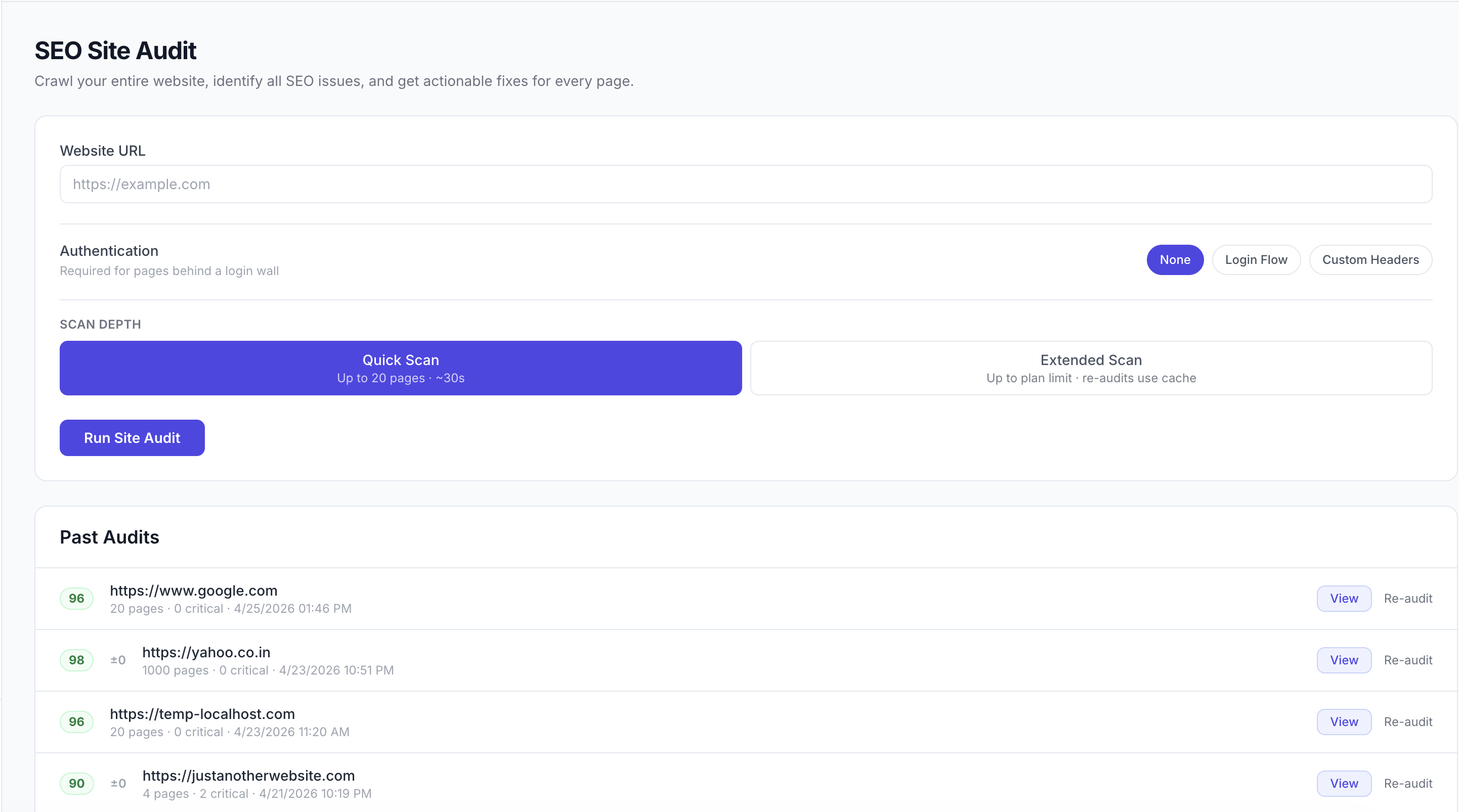
SEO Audit results — issues ranked by impact with exact fix instructions per page
⚠ Validation & best practices
- Validation: Site URLs must include the protocol — enter https://yourdomain.com, not yourdomain.com.
- Best practice: Connect Google Search Console to unlock real click and impression data, making issue prioritisation ~40% more accurate.
- Best practice: Re-run the audit after each deploy to catch regressions before they affect rankings.
AEO Audit
Checks whether your content is structured for AI answer engines — FAQPage schema, question-based headings, conversational phrasing — the signals that get you into featured snippets and voice results.
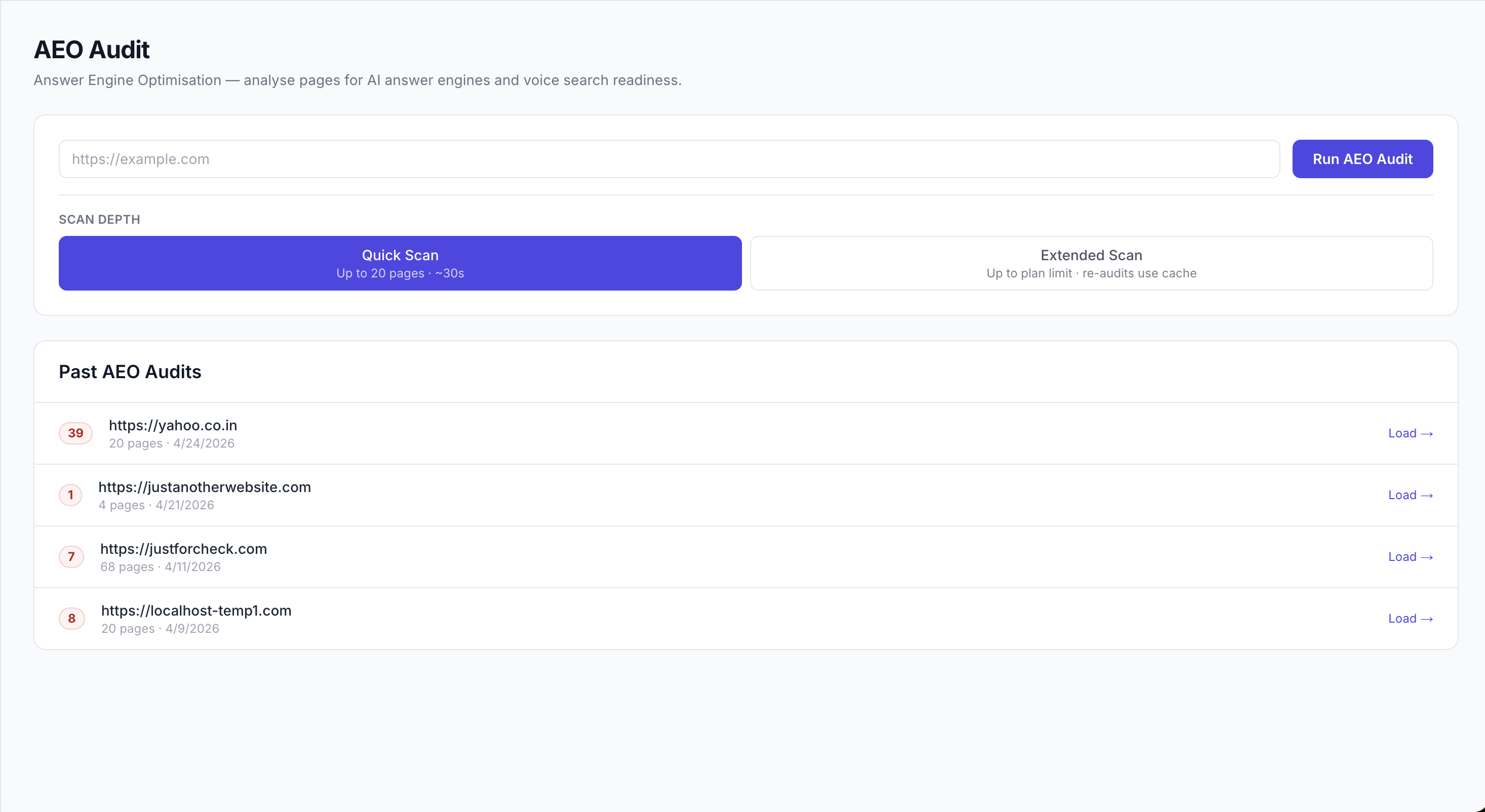
AEO Audit — FAQ schema status, conversational signals, and voice-search readiness by page
✦ Best practices
- Best practice: Use question-form H2/H3 headings (e.g. "How does X work?") — answer engines extract these directly.
- Best practice: Keep each FAQ answer between 40–60 words. Google's featured-snippet extraction window is roughly that length.
- Best practice: Add FAQPage schema to every page with a Q&A section — Rankverse can generate and push this via a GitHub auto-fix PR.
GEO Audit
Analyses your content the way ChatGPT and Gemini do — entity coverage, citation signals, author credibility, and source authority — then tells you exactly what to change.
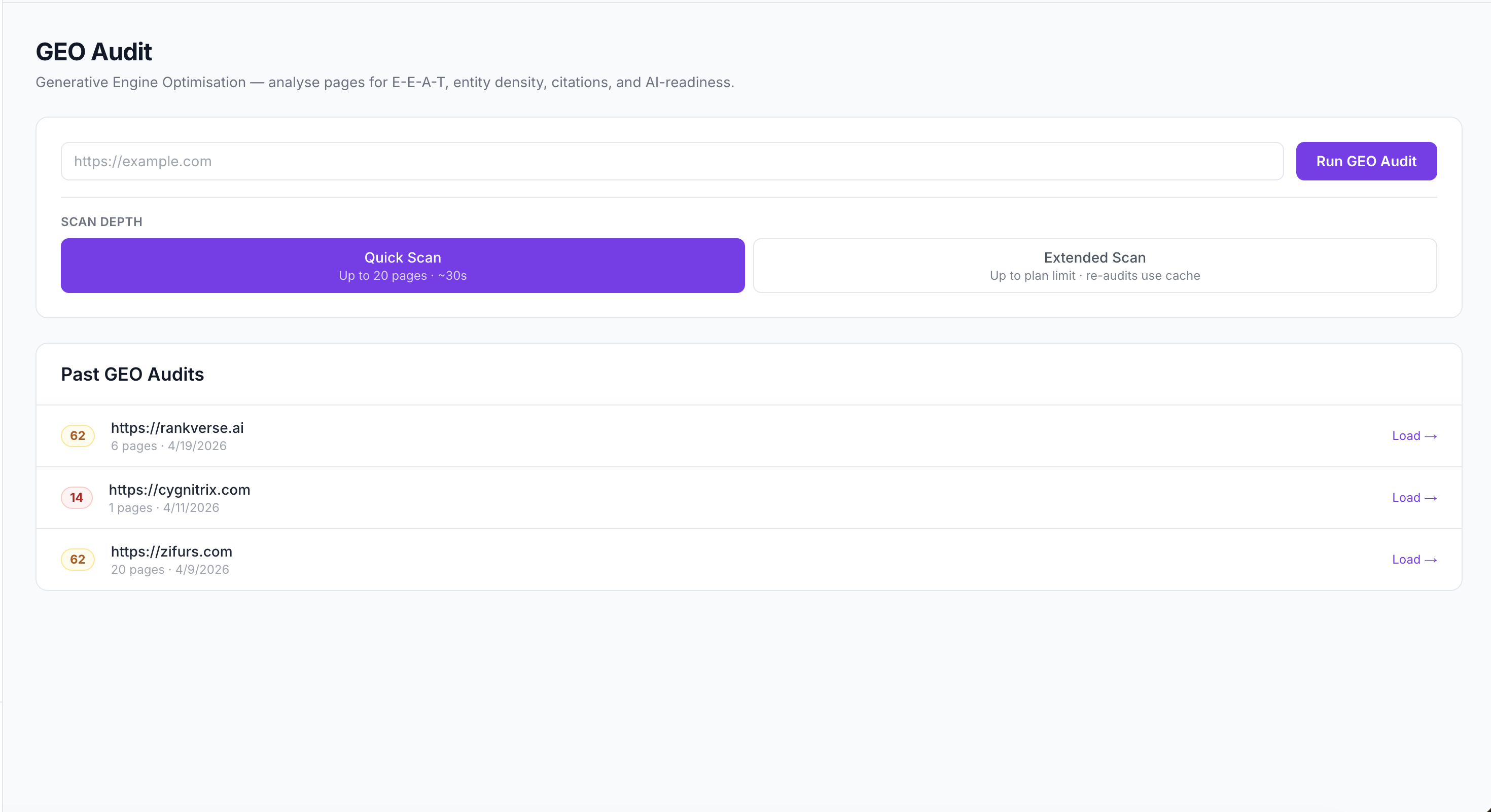
GEO Audit — entity coverage, citation signals, and AI-readiness broken down by page
AI Visibility Tracker
Runs real prompts against ChatGPT, Perplexity, Claude, and Gemini, then scores each mention by position, quality, and whether your brand was cited as a source.
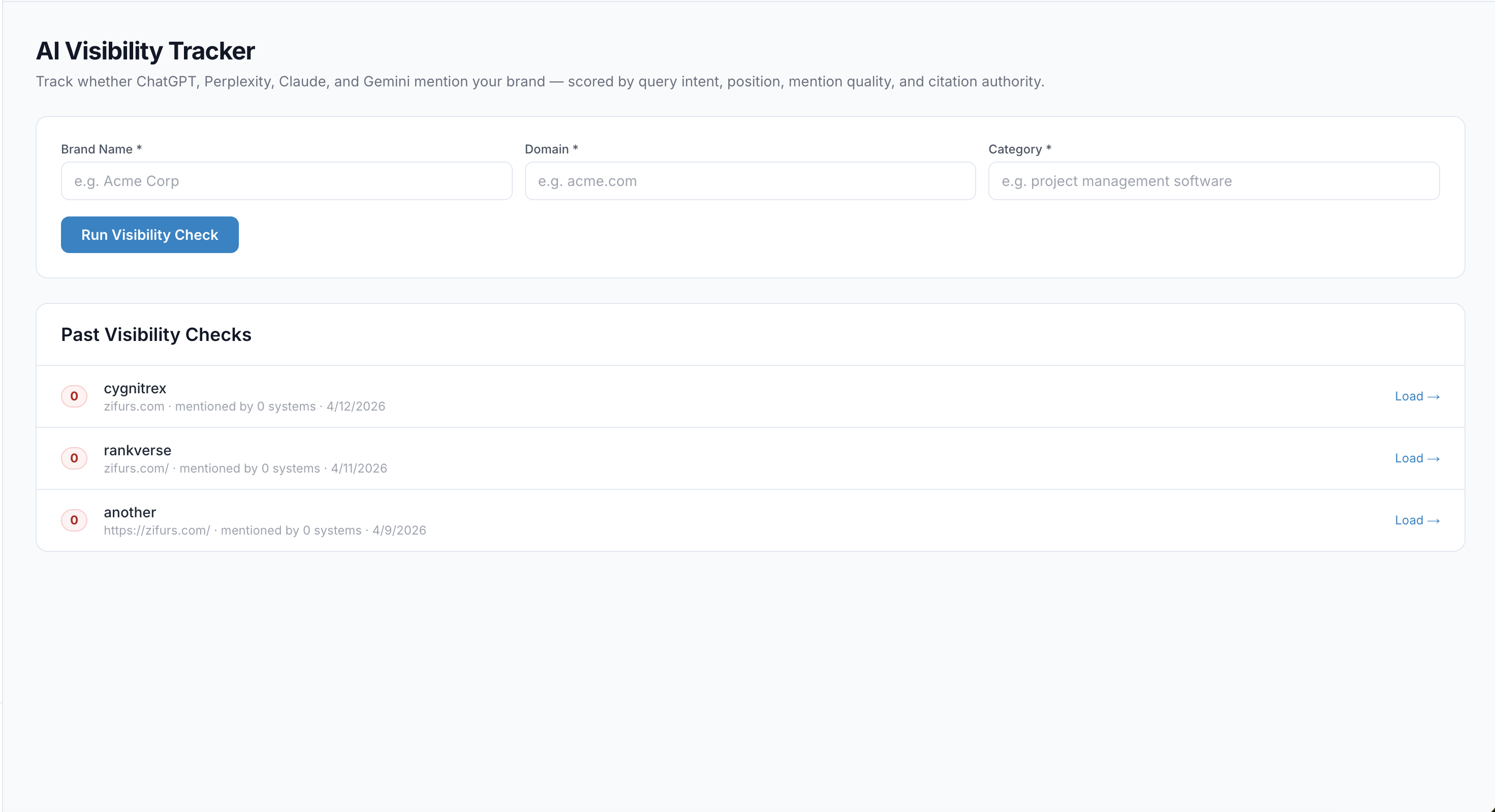
AI Visibility Tracker — mention position and citation quality across four AI engines
GitHub Auto-fix PRs
Detects your framework, patches the relevant source files — meta tags, structured data, canonical tags — and opens a GitHub Pull Request you just review and merge.
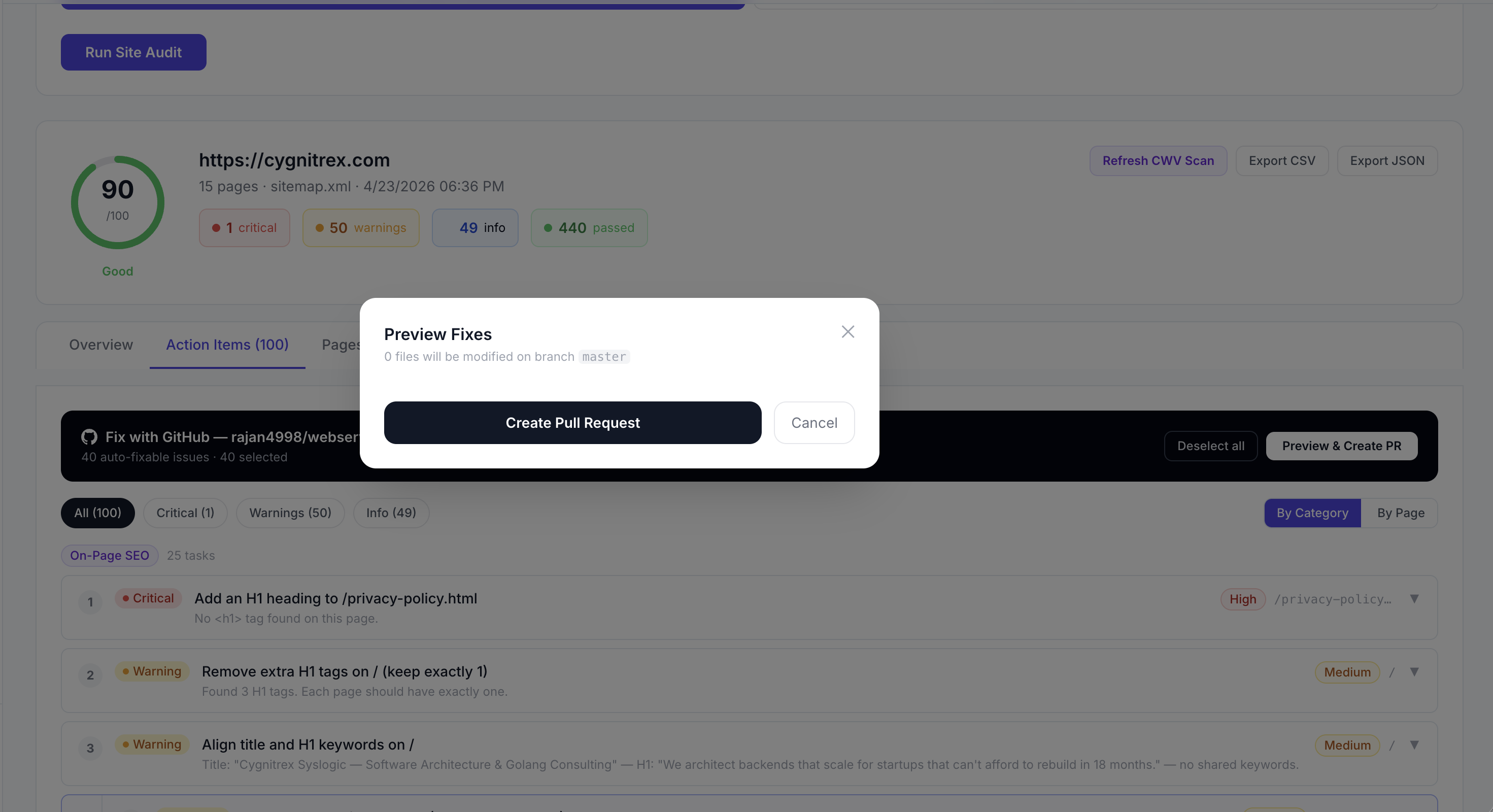
GitHub Auto-fix PR — framework-aware patches with a per-issue impact summary
⚠ Validation & best practices
- Validation: The connected repository must be the source repo for your live site — not a mirror or archive branch.
- Validation: Rankverse requires repository write permission (not read-only) to create branches and open PRs.
- Best practice: Always review the PR diff before merging — especially schema.org changes. Rankverse patches what it finds; your templates may have side-effects.
- Best practice: Set up branch protection rules on main so the auto-fix PR goes through your normal CI pipeline before merging.
Keyword Tracking
Track where you rank for the keywords that matter. Spot drops, competitor overtakes, and new opportunities without digging through Search Console manually.
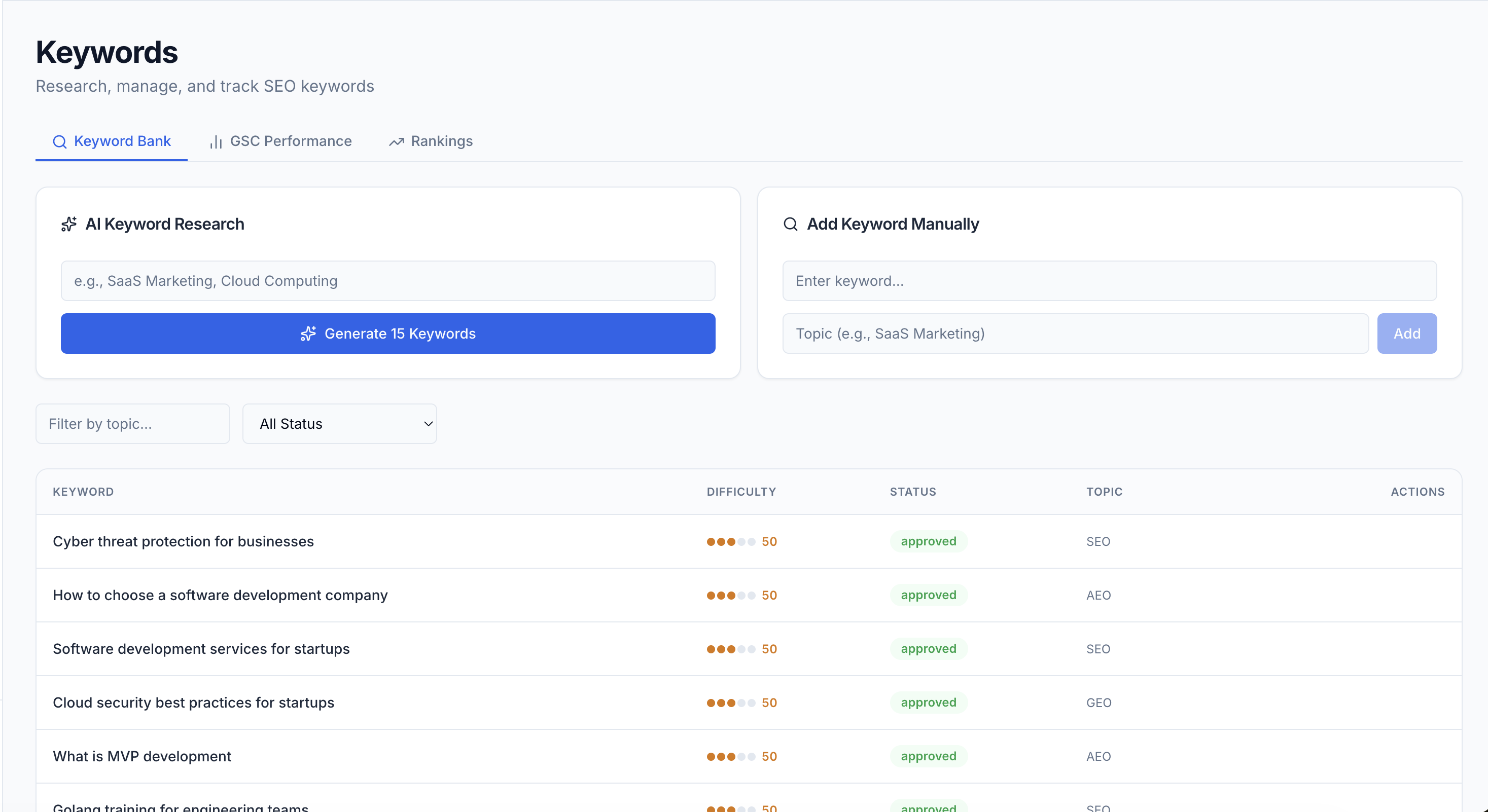
Keyword Tracking — position trends, volume, difficulty, and GSC-enriched insights in one view
⚠ Validation & best practices
- Validation: Target URLs must include the protocol — use https://yourdomain.com/page, not yourdomain.com/page.
- Validation: Track keywords at either national or local level for the same term — tracking both simultaneously inflates your reported impression count.
- Best practice: Connect Google Search Console for ~40% more accurate position data. Without GSC, positions are estimated from third-party SERP data.
- Best practice: Track 20–50 high-intent keywords per site rather than hundreds of broad terms. Quality coverage beats quantity for actionable insights.
Still have questions?
Didn't find what you were looking for? Contact Us and we'll get back to you in no time.